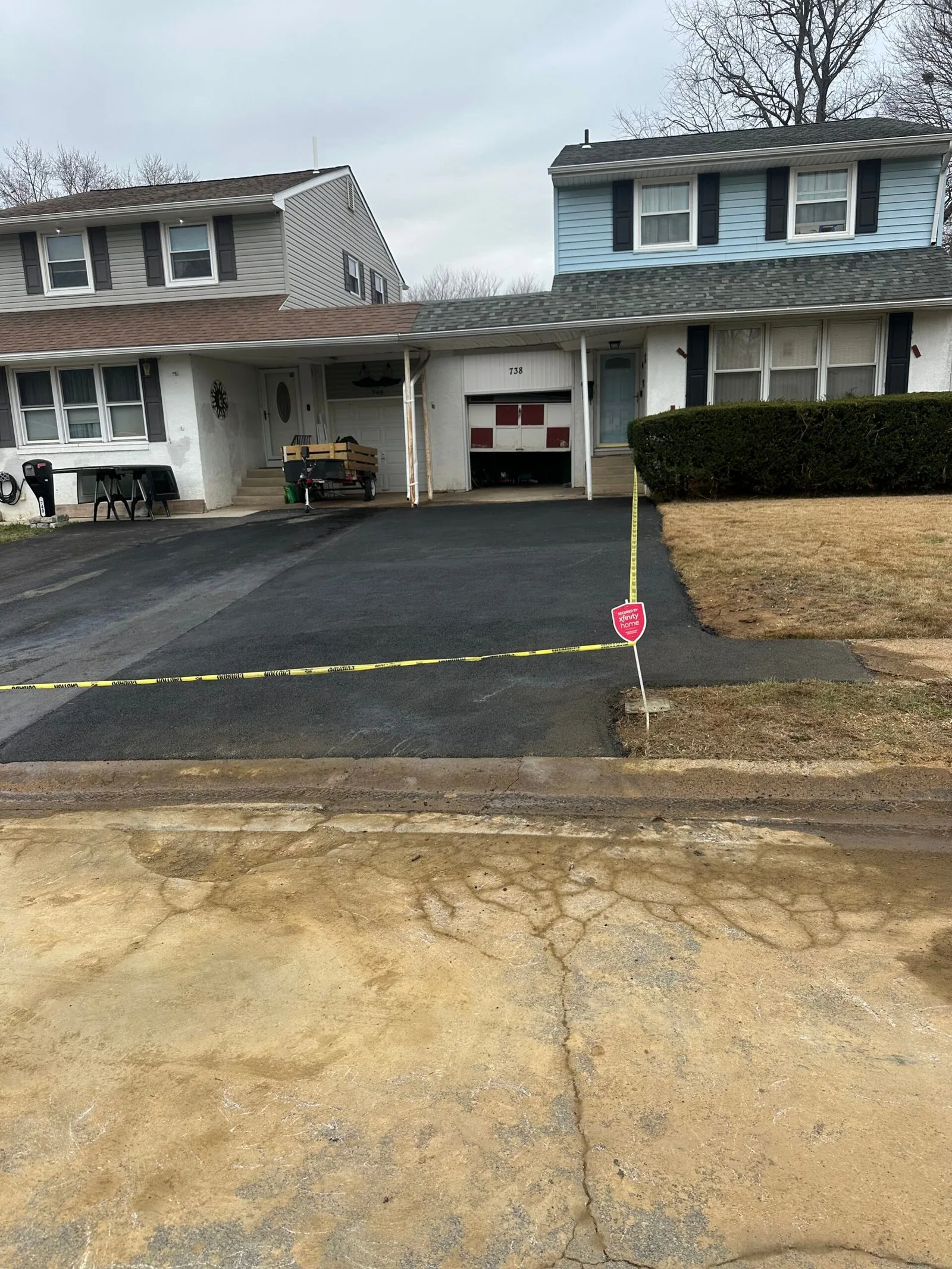
A faded driveway and a failing driveway can look similar from the street. That does not mean they need the same work. An asphalt overlay adds a new paved layer over prepared existing pavement; full replacement removes the existing pavement within the agreed scope and addresses the supporting construction as specified.
For a Delaware homeowner comparing proposals, the first question is what condition the contractor expects to retain underneath the new surface. Campos Mora Construction offers paving, overlays and repair work. This guide helps you ask what each recommendation includes.
Separate the four common scopes
A patch addresses a defined damaged area. Sealcoating is a surface maintenance treatment; it does not rebuild a failing pavement structure. An overlay creates a new asphalt surface over existing pavement that has been evaluated and prepared. Replacement removes pavement and allows more extensive work on the underlying area.
Those descriptions are starting points. A proposal called “resurfacing” may include substantial repairs, or very little preparation. Ask for the actual tasks and quantities instead of comparing names alone. Review asphalt overlays and patch repair to frame the discussion.
Look below the color of the pavement
Surface fading alone does not tell you whether the supporting layers are adequate. Repeated potholes, settlement, interconnected cracking and water that remains after rain are reasons to investigate the cause before adding another surface.
The Asphalt Institute’s engineering FAQs emphasize the role of structural condition and sound preparation in rehabilitation decisions. Your driveway still needs a site-specific assessment: photographs can document symptoms, but they cannot establish the condition of the base.
Before the visit, mark the areas that concern you on a simple sketch. Note whether a depression has changed, whether a repair keeps failing and where vehicles regularly turn or park. A dated sequence is more useful than a guess about the pavement’s age.
Ask where the water will go
Walk the driveway after rain from a safe position. Record ponding, runoff from downspouts and water arriving from adjacent ground. Then ask the contractor to explain the proposed drainage path.
An overlay changes finished elevations. The design needs to account for garage entrances, thresholds, sidewalks and connections to the road. Ask whether milling, edge preparation or transition work is included so a new layer does not create an awkward connection.
The Asphalt Institute’s driveway best-practices guide discusses drainage, foundation preparation and paving construction. It is useful background, not a universal residential specification for every Delaware property.
When might each approach make sense?
An overlay may be worth discussing when the existing pavement can support the proposed work after appropriate repairs and the elevations and drainage can be resolved. Ask which damaged areas will receive deeper repairs before the overlay goes down.
Full replacement deserves consideration when the existing construction cannot reasonably be retained, when failures are widespread or when substantial changes in grading or layout are needed. The contractor should explain the evidence for that recommendation and what will be rebuilt.
A targeted patch may be sufficient for a localized problem when the surrounding pavement is serviceable. None of these decisions should rest on a blanket percentage-of-cracks rule or a promise that fresh asphalt will cure every problem.
Compare written scopes side by side
Ask each contractor to identify:
- The measured area and the portions to be removed or retained.
- Full-depth repairs, base work and how hidden unsuitable material will be handled.
- Proposed grading, drainage and edge transitions.
- Asphalt material and specified compacted thickness for this project.
- Access restrictions, weather contingencies and reopening instructions.
- Cleanup, disposal and the process for approving additional work.
For broader budget context, read our driveway paving cost guide. Use it to understand cost factors, then compare property-specific scopes rather than treating a general guide as a quote.
Request an assessment, not a surface-only answer
Gather your observations and ask Campos Mora to explain which pavement can be retained and why. Review driveway installation, then request an estimate with your location, approximate dimensions and photographs. A useful recommendation connects the new surface to the condition below it and the way water moves across the property.
Written by Campos Mora Construction
Need paving work? Get a free estimate.
No obligation, no hassle. We'll assess your project and give you an honest quote.